Ropeways, Forts and Viewpoints: Where Phones Fall From Height

Gulmarg, Auli, Darjeeling, Raigad, Nandi Hills. The ropeway lurches as it passes a tower, everyone laughs, and somebody's phone is now three hundred metres below in snow or scrub.
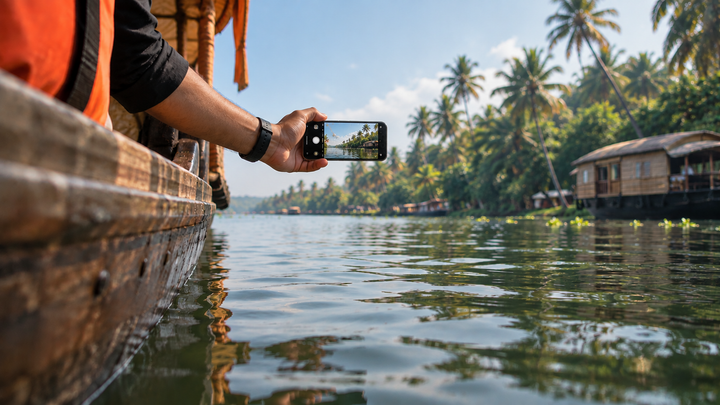
Height drops share one mechanic. You extend an unsupported arm past a boundary, because that is where the view is, and then something moves that you did not control. Holding tighter does not help, because the failure is not grip strength, it is a sudden change in direction while your fingers are relaxed around a smooth slab of glass.
Why cable cars in particular
A ropeway is smooth between towers and abrupt at them. Every support the cabin passes produces a jolt, and on many Indian ropeways that jolt is substantial enough that people grab the rail.
Two things make it worse than an ordinary jolt. The cabins usually have windows that open or gaps beneath sliding doors, because they are not sealed vehicles. And a moving cable car is exactly when people are filming, so the phone is out, extended and pointed at the gap for most of the ride.
The practical rule: film through glass, not through an opening, and keep the phone inside the plane of the window frame. If you want the shot without glare, wait for a stop.
Forts and parapets
Indian hill forts were built to be defended, not to be leaned on. A great many have parapets at an awkward height, uneven stone tops with no lip, and a drop on the far side that is not a slope but a face.
The specific failure is resting the phone or your forearm on the parapet to steady a shot. Old stone is rounded, often damp, and frequently sloped outward for drainage. A phone set down for a second slides.
If you want a steady shot, brace your elbows against the inside face of the wall rather than putting anything on top of it.
Cliff viewpoints and waterfalls
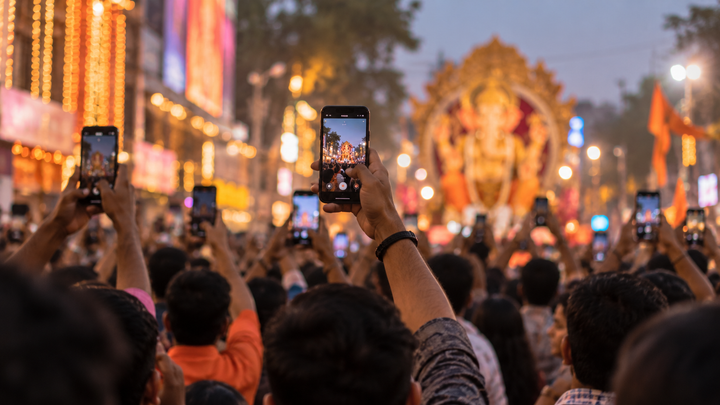
These combine every factor at once: wet rock, spray on the lens, wind, an audience, and a reason to reach past the edge.
Wind deserves its own mention because people do not plan for it. At an exposed viewpoint a gust does not blow a phone out of your hand directly. It makes you flinch, adjust your footing or shield your face, and the phone leaves during that reaction.
Waterfall spray is worse than rain because it arrives sideways and carries grit. It also means every surface within reach, including your hands and the rock you are standing on, is slick.
The habit that covers most of it
One thing, done consistently, addresses the majority of height losses.
Do not photograph with an unsupported arm extended past a boundary. Brace your forearm against the inside of the rail, the wall or the window frame, and let the phone sit inside that boundary rather than beyond it. The photograph is almost always the same. The risk is not.
After that, in order of how much difference they make:
- Both hands when you are near an edge. A one-handed shot at a viewpoint is the signature of a lost phone.
- Keep it attached while it is out. A wrist tether turns a slipped grip into a swing. This is the situation it is built for.
- Wrist strap the camera too if you are carrying one. The same physics applies.
- Step back before you review the shot. Most people take the photo carefully and then relax at the edge while looking at it, which is the more dangerous moment.
The part that is not about the phone
Worth saying plainly on a page about viewpoints: if a phone goes over an edge, let it go. People have been seriously hurt scrambling after dropped phones on loose ground, and a handset is replaceable in a way that you are not.
The same applies to reaching. No photograph is worth changing your footing at an unprotected edge, and that is true whether or not you are wearing anything on your wrist.
What a tether does not do
It covers the phone in your hand. It does nothing for a phone resting on a parapet, nothing once the phone is falling from someone else's grip, and nothing about the ground being slippery.
Most importantly, it must not change how far you lean. If it does, it has made the situation worse, and that is a real risk with any safety product.
Frequently asked questions
Can I use my phone on a ropeway in India?
Generally yes, but keep it inside the window frame and away from door gaps, and hold it with both hands. Cabins jolt as they pass each support tower, which is usually the moment people are filming.
Why do phones get dropped at viewpoints so often?
Because the photograph requires an unsupported arm extended past a boundary, which is also the position with the least control. Add wind, wet rock or a crowd behind you and a small movement is enough.
Does a phone case help at height?
Only for the landing, and at height there usually is not a survivable landing. A case is for a drop onto a floor. Preventing the separation matters more than cushioning it.
Should I retrieve a phone that falls over an edge?
No. People have been badly injured climbing after dropped phones on loose or steep ground. Report it to site staff if there are any, and let it go otherwise.
What about wind at exposed viewpoints?
Wind rarely takes a phone directly. It makes you flinch or adjust your footing, and the phone goes during that reaction. Brace before you shoot rather than reacting mid-shot.
The shot is the same from behind the rail. See how PHLOOP works →
Related reads

Enjoyed this? Get the next one.
Join the PHLOOP list for new guides, product drops, and announcements. No spam.
Keep reading