Phone Overboard: Boats, Backwaters and Ferries in India

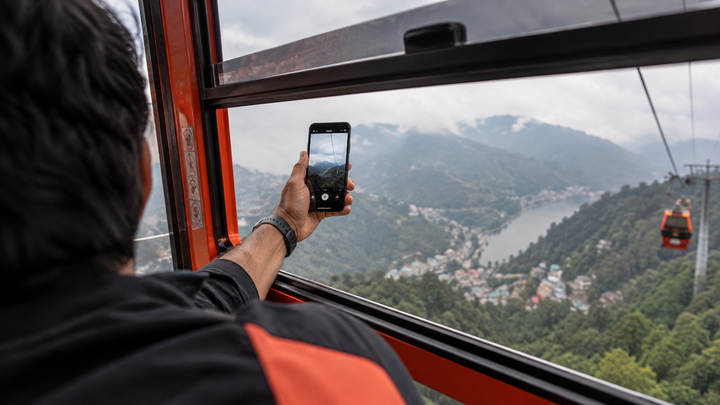
You are on a shikara on Dal Lake, or a houseboat in Alleppey, or the ferry out to Elephanta. The phone is out because the view is the entire reason you came. The water is about a foot below your hand.
This is the only common travel drop with no recovery path. A cracked screen is a bill. A phone in a backwater is every photo from the trip, your tickets, your two-factor codes and your bank access, gone in the time it takes to say so. Water resistance does not change this, and most people misunderstand why.
What an IP rating actually promises
IP68 means the phone survived a defined immersion test in fresh water, at a set depth, for a set time, when new. Three things follow that almost nobody is told.
- It assumes retrieval. The rating describes a phone that comes back out. It says nothing about finding it in four feet of silty backwater.
- It degrades. Seals age, and a phone that has been dropped, opened or repaired has usually lost the rating it shipped with. Nobody re-tests it.
- It is fresh water. Salt is a different problem, and the test does not cover it.
Every major manufacturer excludes water damage from warranty regardless of the rating, which tells you how much they trust it in real use.
Salt water is worse than it looks
A phone recovered quickly from a lake has a reasonable chance. The same phone recovered from the sea is on a clock, because salt crystallises inside the device and keeps corroding contacts long after the outside is dry.
If it happens, rinsing briefly in clean fresh water is counter-intuitive but is what repair technicians actually advise, because leaving salt in place is worse than a short second wetting. Then get it to a technician rather than trying to dry it yourself.
Boat by boat
| Where | The specific risk | What to do |
|---|---|---|
| Shikara, Dal Lake | Sitting low, phone at water level, boat rocks when others move | Tether, and brace your forearm on the side rather than reaching over |
| Kerala houseboat | Long hours, relaxed grip, open sides | Tether while out, zipped away otherwise |
| Elephanta and inter-island ferries | Standing at the rail, wind, sudden engine changes | Shoot from behind the rail, both hands |
| Goa and Andaman speedboats | Spray, slamming over wake, salt | Phone away entirely, dry bag |
| River rafting | Full immersion is expected, not accidental | Dry bag only. A tether is not the tool here |
| Small local crossings | No rail at all, crowded, uneven boarding | Do not use the phone while boarding |
The first ten minutes, if it survives the fall
If the phone goes in and you get it back:
- Do not charge it. Power through a wet port is what turns a recoverable phone into a dead one. This is the single most common mistake.
- Power it off if it is still on, and leave it off.
- Do not press buttons or shake it, which moves water further inside.
- Rinse briefly in fresh water if it went into the sea, then dry the outside.
- Leave it somewhere dry and airy, upright, for a day or more.
- Then a technician, not a charger.
The rice trick does not work. Rice draws moisture from the air slowly and poorly, and rice dust gets into the ports. Manufacturers explicitly advise against it. Still air in a warm dry room does the same job without the dust.
The decision, simplified
On any boat there are only three states, and one of them is the problem.
- Attached to you while you are using it. A wrist tether means a slipped grip is a swing instead of a splash.
- Zipped away when you are not. Not a loose pocket on a rocking boat.
- Held loosely over the side while framing a photo. This is the position with no recovery path, and it is also the only position the photograph exists in, which is exactly why it keeps happening.
The trick is to make the third one the first one.
What a tether does not do here
We make one, so the limits matter. A tether covers the phone in your hand. It does nothing on a raft, nothing for a phone that slides out of an open bag, and nothing in water rough enough that you would not be holding a phone anyway.
It is also not a licence to lean further over the side. If it changes how far you reach, it has made things worse rather than better.
Frequently asked questions
Will my waterproof phone survive falling in a lake?
Only if you retrieve it, which in open water you generally will not. An IP rating describes surviving a brief, shallow, fresh-water immersion when the phone is new. It is not a promise about being found.
Does putting a phone in rice work?
No. It dries slowly, works poorly, and rice dust gets into the charging port and speakers. Manufacturers advise against it. Air-dry it somewhere warm and dry instead, and do not charge it.
What should I do first if my phone falls in water?
Do not charge it. Power it off, leave it off, avoid shaking or pressing buttons, and if it went into the sea rinse it briefly in fresh water before drying. Then take it to a technician.
Is a phone tether useful on a boat?
Yes, for the moment the phone is in your hand near the side, which is when almost all boat losses happen. It is not a substitute for a dry bag on a raft or a speedboat.
Is water damage covered by warranty in India?
Generally no. Manufacturers exclude liquid damage from standard warranty even on phones with an IP rating, and most have an internal liquid indicator that shows a technician what happened.
The photos are worth more than the phone. See how PHLOOP works →
Related reads

Enjoyed this? Get the next one.
Join the PHLOOP list for new guides, product drops, and announcements. No spam.
Keep reading